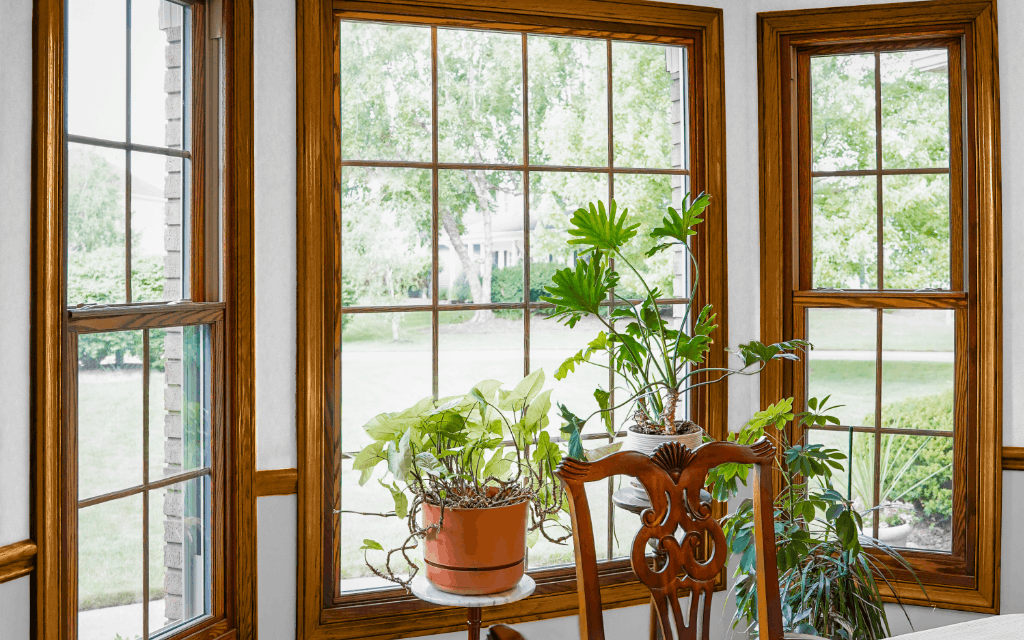
Somewhere on your window quote, there’s a line that says insert or full-frame. Most people sign without asking what it means. That one choice decides how much of the old window stays in your wall, what the crew can see once the old sash comes out, and what happens if the wood underneath turns out to be soft.
Below is the installation in the order it happens, from the first inspection to the walk-through before the crew packs up. Some steps are the same on every job. Others depend on the window’s own installation instructions and on how your house was built, and we point those out as we go.
1. Inspect the Existing Window Before Choosing a Replacement
Fog between the panes means the seal on the glass unit has failed. A sash that sticks or won’t lock usually points to worn hardware or a frame that has moved. Those symptoms tell you about the window. They tell you very little about the wood around it. A soft sill, a stain on the wall below, or paint that keeps peeling at the bottom corners suggests water has been getting past the window for a while.
So a good inspection goes past the glass. The installer should press on the sill and lower jambs (the vertical sides of the frame), look at the exterior trim and old caulk, and check the wall under the window from inside. Age matters here too. In Lucas County, roughly one home in four was built in 1939 or earlier, and about three in four were built before 1980, according to the Ohio Department of Development’s county profile. An older house isn’t automatically a rotten one, but it does raise the odds of out-of-square openings, old sash weight pockets, and lead paint. Federal rules require lead-safe work practices on pre-1978 homes, and ProVia’s own installation instructions say the same. A free in-home window inspection is the point to ask about all three.
2. Insert Replacement vs. Full-Frame Replacement
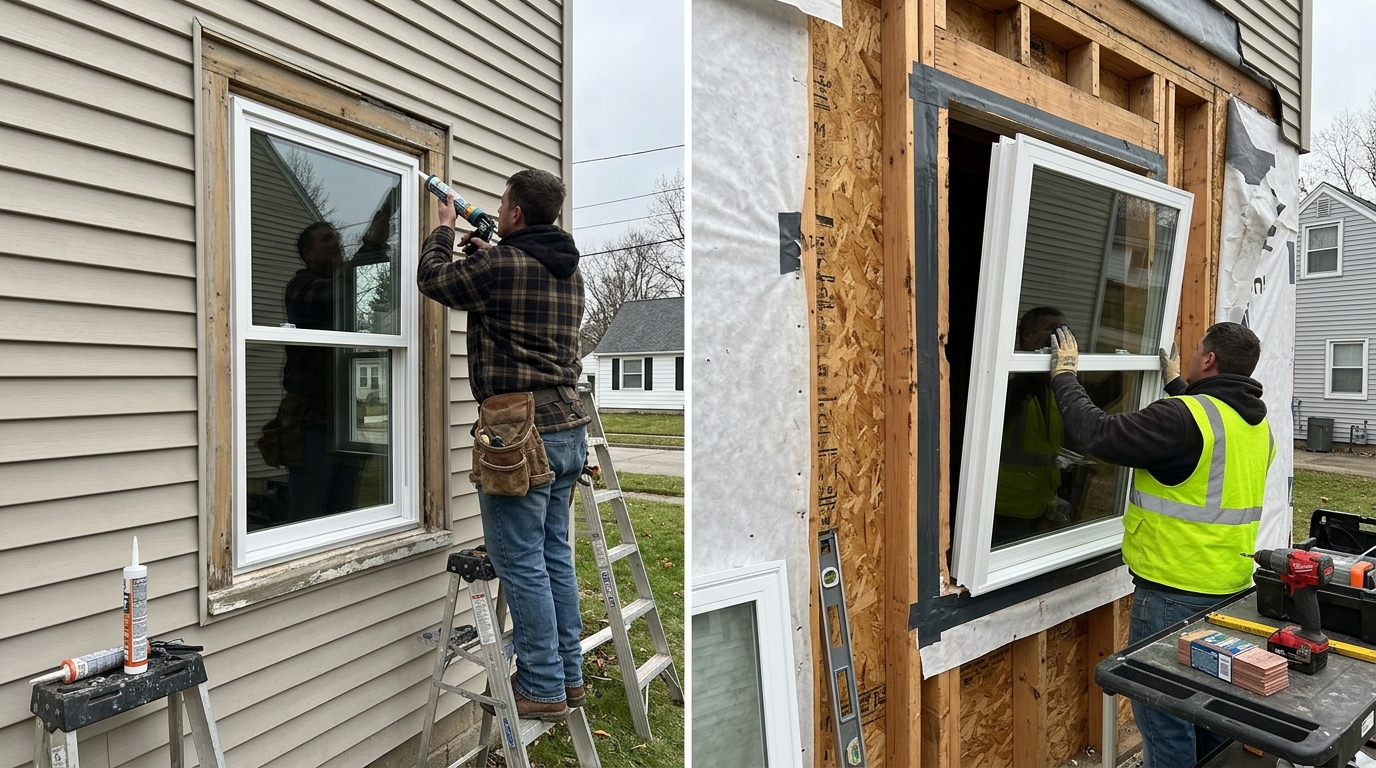
An insert replacement, sometimes called a pocket replacement, keeps the existing frame in the wall. The crew removes the old sashes, the interior stops, the parting strips and any pulleys, then sets a new, fully framed window inside the old frame. A full-frame replacement takes everything out down to the rough opening, which is the framed hole in the wall. That usually means the interior casing comes off, and sometimes exterior trim or siding as well.
The U.S. Department of Energy’s Building America checklist lists both methods. It recommends full-frame because many older windows were never air-sealed behind the trim and may have no pan flashing (a tray that sends water at the sill back outside), and full-frame exposes those areas so they can be fixed. Insert replacement is still the more common choice, and it can perform well when the old frame is sound and the new unit is sealed to it the way the product instructions call for. The right method follows the opening, not a sales preference.
Insert Replacement vs. Full-Frame Replacement: What Toledo Homeowners Should Check
| What to check | Insert replacement | Full-frame replacement | Question to ask the installer |
| What stays in the wall | The old frame still stays. Old sashes, stops, parting strips and pulleys come out. | The whole old window comes out, frame included. The new unit goes into the rough opening. | “Which parts of my current window will still be there when you’re done?” |
| Trim removal | Interior stops come off. Whether casing or exterior trim is disturbed depends on the method and product. | Interior casing comes off. Exterior trim, and sometimes siding, comes off so the opening can be flashed. | “What trim or siding will you remove, and who replaces or repaints it?” |
| Condition of the old frame | It has to be sound. The new window is fastened and sealed to it, so soft or out-of-level wood is a problem. | The old frame is removed, so its condition matters less. The framing around the opening still has to be solid. | “How did you check my sill and jambs, and what did you find?” |
| Hidden rot or water damage | Harder to see. Damage behind the old frame can stay hidden unless trim comes off. | The opening is fully exposed, so damage gets seen and repaired before the new window goes in. | “If you find rot, how will you show me, price it and get my OK before you continue?” |
| Glass area and look | The new frame sits inside the old one, so frame material takes up some of the opening. How much varies by product. | Lets you keep the opening size, or change the size or shape of the window. | “Will my visible glass get smaller? Can you show me a sample corner?” |
| Finishing work | Usually less. The old exterior frame is often covered with trim, and interior stops or trim are replaced. | More. New interior casing, exterior trim, paint and possibly siding patching. | “Is painting, caulking and trim matching in my quote?” |
| Water and air sealing | Seals are made between the new unit and the old frame, plus exterior sealant. Any flaw in the old opening’s water path stays in place. | The opening can be air-sealed, and the sill, sides and head flashed and tied into the wall’s weather barrier. | “How do you handle water at the sill on my house?” |
| What drives the price | Fewer materials and less labor in a sound opening. | More labor, trim and flashing materials, plus repairs that only show up once the opening is open. | “Which items are priced per window, and which only if needed?” |
| When it’s a poor fit | A rotted or racked frame, a sill that isn’t level or well supported, or a new window size. | A sound frame where the extra disruption buys you little. Brick or masonry openings can add work. | “Why this method for this particular window?” |
3. How Installers Measure Replacement Windows
Measuring for a replacement window isn’t the same as measuring the glass or the outside trim. For an insert, the installer measures the space inside the existing frame that the new unit has to fit into. For full-frame, what matters is the rough opening, and part of it is hidden behind trim until removal. In both cases the size that gets ordered comes from the product’s own sizing rules. ProVia’s instructions, for example, leave room for shims and foam and warn against fitting a vinyl frame so tight that it can’t expand in summer heat.
Windows for older homes are usually built to order, so a measuring mistake shows up weeks later on install day. Ask who took the measurements, whether the sizes are printed on your order confirmation, and how the full-frame opening size will be confirmed before anything is built.
4. Choose the Right Replacement Window
Style changes how the window opens, but it also changes the installation details. ProVia publishes separate installation manuals for its double hung, slider and picture windows, because the shimming, fastening and sealing steps differ by style. Double hung windows depend heavily on even gaps around the sashes. Casement windows crank outward and need clearance on the outside. A picture window can usually go into a sound existing frame, but going bigger than the old opening generally means reworking the header above it, which turns the job into a full-frame installation.
For the glass, look for the ENERGY STAR label and compare the U-factor printed on it (lower means better insulation). The Department of Energy is blunt that even the most efficient window can leave a room drafty if it’s installed badly. That’s why the rest of this article spends more time on the installation than on the product.
5. What Happens Before Installation Day
There are two timelines. One is the calendar from signed quote to finished job, which covers ordering, manufacturing, delivery, any permits, and the install itself. The other is the hours a crew spends at your house. Lead times vary by product and season, so ask for a date range in writing. In Toledo, replacing windows without changing their size in a one, two, or three-unit home requires a city permit. The City of Toledo’s permit page says that when a homeowner hires a contractor, the contractor applies. An older Toledo building inspection handout also suggests getting the final inspection done before making the final payment, and putting debris removal in the contract.
Your prep is mostly about access. Take down blinds, curtains and rods, clear a working space in front of every window, and take pictures and mirrors off nearby walls since removal can shake them loose. If you have alarm sensors on the window frames, ask who disconnects and reinstalls them. Keep pets in a closed room, because there will be open holes in the wall for short stretches. Outside, move planters and decorations away from the windows. And if you want to keep your old storm windows, say so before the crew starts.
6. Removing the Existing Window
Removal depends on the method. For an insert, the crew takes out the interior stops, the sashes, the parting strips and any pulleys. Older double-hung windows often have sash weight pockets inside the wall, and those hollow pockets are an air path. The Building America checklist calls for cleaning and sealing the opening during an insert job and filling weight pockets with insulation during a full-frame job. Ask what will happen to yours.
Removal is also when dust and paint chips fly, so floors and furniture near each window should be covered. In a pre-1978 home, ask how the crew handles lead-safe work under the EPA’s Renovation, Repair and Painting rule. Federal guidance says to assume lead paint is present unless testing shows otherwise.
7. Inspecting the Opening for Damage
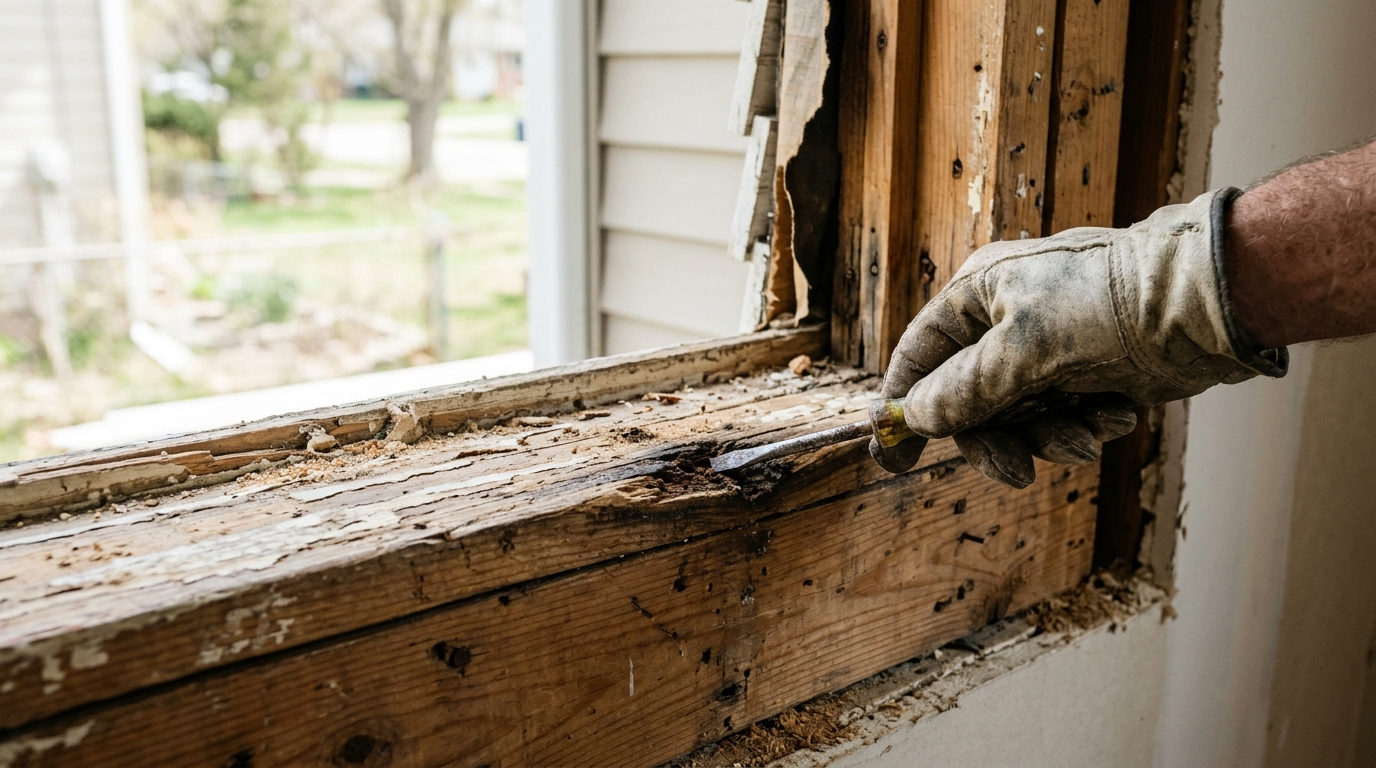
Once the old window is out, the installer has the best view anyone will get of the opening. ProVia’s instructions tell installers to check that the sill is level, flat and structurally supported before setting the new unit, and to fill any voids left by the old window with low-expanding foam. Soft wood, dark staining or crumbling framing should be dealt with now. Covering it with a new window and fresh trim only hides the problem until it shows up again inside the wall.
Hidden damage is where surprise costs come from, so settle the process before work starts. Ask how damage will be shown to you (photos are reasonable), how repairs are priced, and whether the crew will stop and get your approval before doing extra work. A written answer beats a verbal one.
Example: Two Openings in the Same House
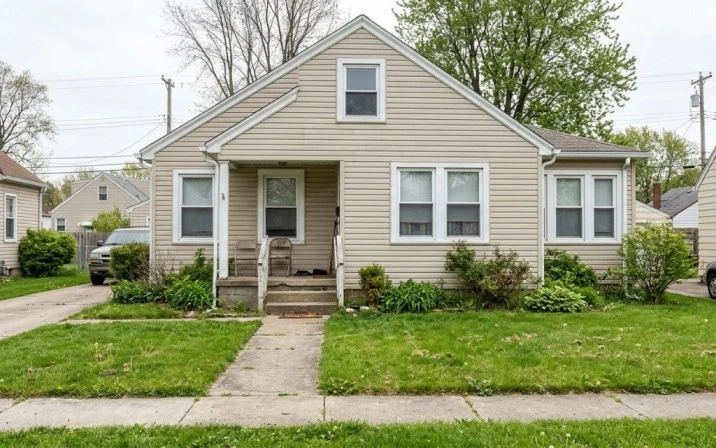
Picture a 1940s house with two kitchen windows. On the left one, the sill is hard when pressed, the old frame is close to square, and the wall below is clean. An installer would likely call that a reasonable insert candidate, measured inside the existing frame. On the right window, the sill gives under a thumb, the bottom corner of the interior drywall is stained, and the exterior caulk has pulled away. An installer would likely recommend full-frame there, because the frame that an insert depends on is the part that’s failing, and the only way to see how far the water went is to open the wall. Same house, same week, two different methods.
8. Setting and Securing the New Window
The new window rests on shims (thin wedges used to level and support it) placed on the sill under each side. ProVia warns that those shims must never tilt the sill toward the inside of the house. The unit is centered, then screwed through factory holes in the frame. The screws hold the frame in place, but over-tightening them pulls the vinyl out of shape. Through the whole process, the installer watches the margins, the small gaps between the sash and the frame. If those gaps are even on all sides, the sash closes against its weatherstripping the way it was designed to.
Three terms come up here. Level means the sill is flat side to side. Plumb means the sides are straight up and down. Square means the corners sit at 90 degrees. For its double-hung windows, ProVia calls for stacked shims beside every screw, none within 4 inches of a corner, and extra screws where the spacing runs past 24 inches. Other products have different rules, which is why “we followed the manufacturer’s instructions” is a fair thing to ask an installer to explain.
9. Flashing, Insulation, and Sealing
These are three separate jobs. Flashing manages water, steering whatever gets behind the siding or trim back outside. Insulation fills the gap between the new frame and the opening. Air sealing stops air moving through that gap. Caulk alone does none of these jobs fully. ProVia’s double hung instructions call for low-expanding window foam rated to ASTM C1620, a silicone sealant meeting ASTM C920 Class 25, backer rod and sealant at the exterior frame-to-wall joint (“do not skip this step,” in their words), clear weep holes at the sill, and a drip cap above the window. They also warn that too much foam can bow the frame, and that the sashes have to work properly both before and after foaming.
Full-frame jobs go further. The Building America checklist calls for a sill pan, side and head flashing lapped like shingles into the wall’s weather barrier, and caulk along the head and sides but not across the sill, so trapped water can still drain out. In Toledo this is more than theory. NOAA’s climate summary for Toledo describes snowfall spread from November through March with frequent thaws, so water collects on sills often over a winter. Ask your installer which flashing, foam and sealant they use, and whether those match the window’s instructions.
10. Interior and Exterior Finishing
Finishing is where insert and full-frame look most different. With an insert, the old exterior frame is often covered with formed trim, and the interior gets new stops or trim pieces. With full-frame, new casing goes in inside, new trim goes on outside, and some siding may need patching. The Building America checklist says any trim removed for flashing should be replaced to match the house, with wood or cement-board trim primed on all six sides.
One detail matters if you’re planning siding work later. ProVia’s instructions say siding and other exterior finishes need a gap where they meet the vinyl frame so it can expand, and that this information has to be passed along to whoever installs the exterior finish. Ask for it in writing.
11. Testing the Window Before the Installer Leaves
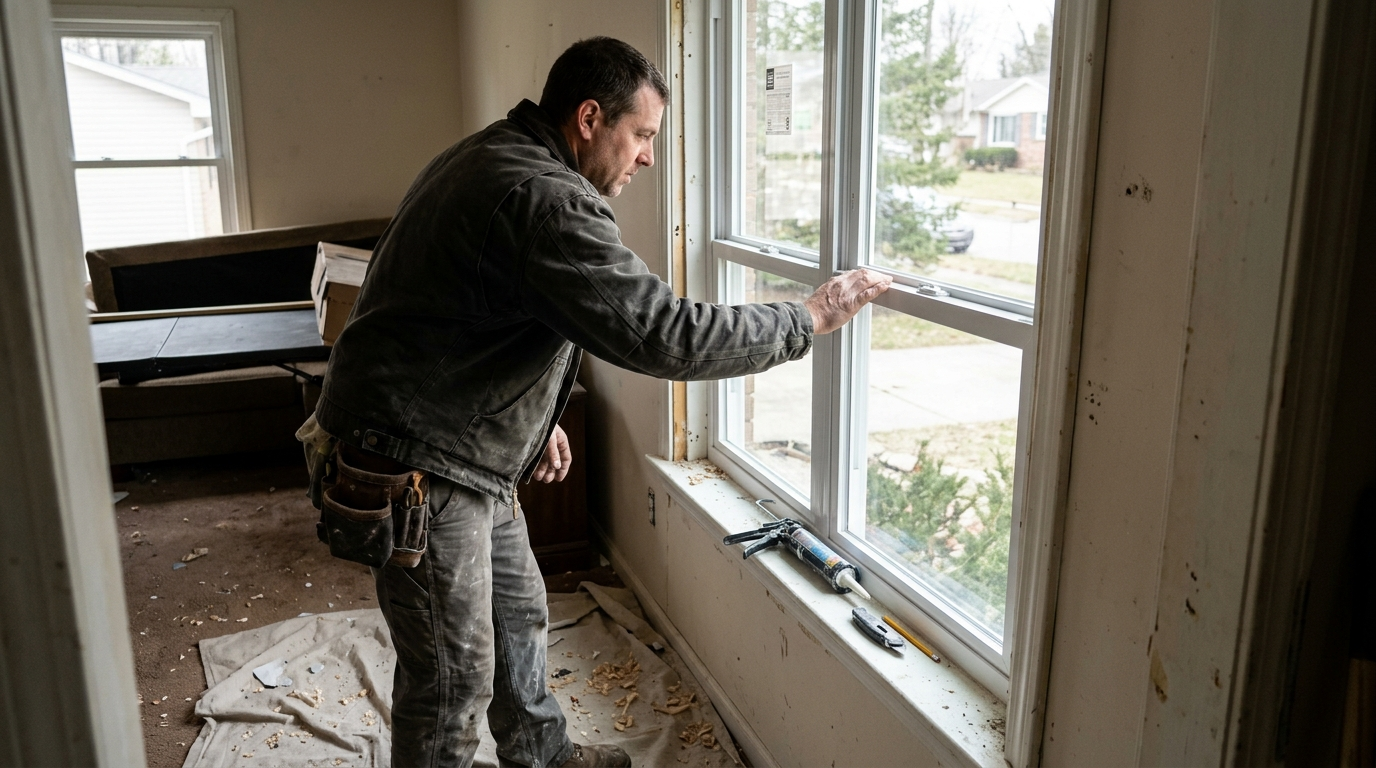
The crew should test each window before calling it done, and you should too. ProVia’s instructions have the installer confirm the sashes move freely, that locks and keepers line up, and that the margins are even. Walk through each window with the crew lead while they’re still there, and write down anything that isn’t right.
Replacement Window Installation Inspection Checklist
| Check | How to check it | What a problem looks like |
| Opening and closing | Open and close each sash fully, several times. | Sticking, rubbing, or a sash that drifts down on its own. |
| Locks and latches | Lock every lock. | A lock that needs force, or won’t line up with its keeper. |
| Gaps and alignment | With the window closed, look at the gap between sash and frame on all sides. | Gaps wider at one end, or daylight visible at the edges. |
| Tilt or crank function | Tilt double-hung sashes in, or crank casements open and closed. | Tilt latches that won’t catch, or a crank that binds. |
| Glass, frame and screen | Look for chips, scratches, cracks and bent screens. | Damage on new glass or frames, missing screens. |
| Exterior sealant | Walk outside and look at the joint where the window meets the wall. | Gaps, skipped sections, or sealant smeared over weep holes. |
| Interior trim and walls | Check casing, stops and the wall around each window. | Gaps at trim joints, dents, or damaged paint and drywall. |
| Drafts | On a cold or windy day, hold the back of your hand near the closed sash and trim. | Moving air you can clearly feel. |
| Water | After the first heavy rain, check the sill and the wall below. | Damp wood, drips, or new staining. |
| Paperwork | Ask for product information, warranty terms and permit status. | No written warranty terms, or no record of the city’s final inspection. |
A visual check has limits. Flashing, fasteners, shims and foam are hidden once the trim goes back on, and a neat bead of caulk proves nothing about what’s behind it. Ask the installer to explain the concealed work, ask whether they photograph openings before closing them up, and put any unresolved concern in writing. This checklist doesn’t replace a professional or city inspection, and passing it doesn’t guarantee a defect-free install.
12. How Long Does Replacement Window Installation Take?
The honest answer depends on which clock you mean. On site, time per window varies with the method, the style, the condition of the opening and the size of the crew. Published estimates from national installers run from about 30 minutes to two hours per insert window. Full-frame takes longer, and contractors quoted in one trade publication estimated two to three times longer than an insert in the same opening.
Repairs to a damaged opening add time no one can predict until the old window is out. Add ordering, manufacturing, delivery and the city’s final inspection, and the full timeline is weeks, not hours. Ask your installer for both numbers: the expected install days and the expected calendar from signature to final inspection.
13. What Can Go Wrong With a Poor Installation?
Most installation problems show up as operation problems. ProVia’s troubleshooting guide links sashes that won’t lock to a sill bowed upward, a header bowed downward, or a frame pushed out of square. It links tight sashes to too much shimming or too much foam at the sides. Daylight along the side margins can come from single wedge shims that roll the frame, and side gaps that open up in cold weather can come from missing screws or shims near the interlock. Leaks at the corners of exterior trim pieces trace back to skipped caulk.
Water problems can take longer to appear, sometimes a season or more. Stains below the window, soft drywall, or swelling trim are the usual signs. The same stain can have several causes, including the window, the flashing, the siding above, or, for a basement window, water pooling in the window well. A homeowner can spot the symptom, but finding the cause often means removing trim.
14. Can Replacement Windows Be Installed During an Ohio Winter?
Generally, yes. Many installers, including large national companies, say in their own FAQs that they install year-round, since the crew opens one window at a time. What changes in winter is the materials and the weather. Snow or ice on the sill has to be cleared and dried before anything gets sealed to it, and ProVia’s troubleshooting guide notes that side gaps can open up in cold weather when screws or shims are missing near the interlock. Ask your installer what they do differently below freezing, and check whether the foam and sealant they use list a minimum application temperature.
Lead times matter here too. A window ordered in late fall may well arrive in the middle of a Toledo winter. If exterior caulking or painting can’t be finished properly in the cold, get it written down when and how it will be completed. Nobody can promise every winter day is a good install day, so build some flexibility into the schedule.
15. Questions to Ask a Window Installer in Toledo
A good installer won’t mind these questions. The answers also make it much easier to compare two quotes line by line.
| Question | Why it matters |
| Insert or full-frame for each window, and why? | The method should follow the condition of each opening. |
| How did you check my sills and frames? | A recommendation is only as good as the inspection behind it. |
| What happens if you find rot after removal? | Sets the approval and pricing process before surprises happen. |
| Which flashing, foam and sealant do you use? | These hidden materials decide how the window handles water and air. |
| Do you follow the window’s installation instructions, and can I see them? | Product instructions set shimming, fastening and sealing rules. |
| What trim, painting and siding work is included? | Finishing is a common gap between quotes. |
| Who pulls the Toledo permit and schedules the final inspection? | The city says the contractor applies when one is hired. |
| How do you handle lead paint in an older home? | Pre-1978 homes need lead-safe work practices. |
| What does the product warranty cover, and what does the workmanship warranty cover, and for how long? | Product and labor coverage are often different. |
| Is debris removal and cleanup in the contract? | Toledo’s city trash service doesn’t pick up construction debris. |
16. What to Know About Windows419
Windows419 is a family-owned, locally owned window replacement company in Toledo. Our installers have 20+ years of experience, and we provide ENERGY STAR certified ProVia vinyl windows in double hung, slider, casement, awning, hopper, picture, bay, bow and custom shapes. We do insert replacements where the existing frame is sound and full-frame work when rot or water damage means the opening has to be rebuilt. We replace windows. We don’t repair them.
Every window includes a limited lifetime warranty, and our installation carries a separate 3-year workmanship warranty. You can read the details on our window warranty page. Our free in-home inspection takes about an hour, ends with a written, itemized quote, and that quote stays locked for a full year. For Toledo homes, we check what permit applies to your address before scheduling. More about our local work is on our Toledo window replacement page.
Frequently Asked Questions
Can I tell from the outside whether I need insert or full-frame replacement?
Not reliably. Peeling paint, failed caulk, and a soft-feeling sill are clues, but water damage often sits behind the frame where nobody can see it. An installer can make a strong call from an inspection, and occasionally the final answer only comes once the old sash is out.
Will full-frame replacement damage my interior walls?
It disturbs the area right around the window. Interior casing comes off and goes back on, and the drywall or plaster edge next to the frame may need touch-up. Ask whether patching and painting are in your quote, since contractors handle this differently.
Is an insert replacement less energy efficient than full-frame?
Not by definition. An insert in a sound frame, sealed to that frame the way the instructions call for, can perform well. The weak spot is anything already wrong behind the old frame, like missing air sealing or no sill flashing, because an insert leaves that area in place.
I’m replacing siding too. Does that change the window installation?
It can. Siding work exposes the wall, which makes full-frame flashing easier to do right. Either way, the siding installer needs the window’s expansion gap requirements, and ProVia’s instructions specifically say that information has to be passed to whoever installs the exterior finish.
Will a new basement window stop water on my basement wall?
Only if the window was the source. Water on a basement wall can come from a window well that fills and drains poorly, from grading, or from the foundation itself. Have the source confirmed before paying for a window to fix it.
Ready to Look at Your Own Windows?
If you’d like someone to check your openings and tell you which method fits each window, you can request a free in-home quote. We’ll walk through what we find, window by window, and you can take your time with the written quote.